
The Cooler
Don't open something if you're not ready to see what's inside.

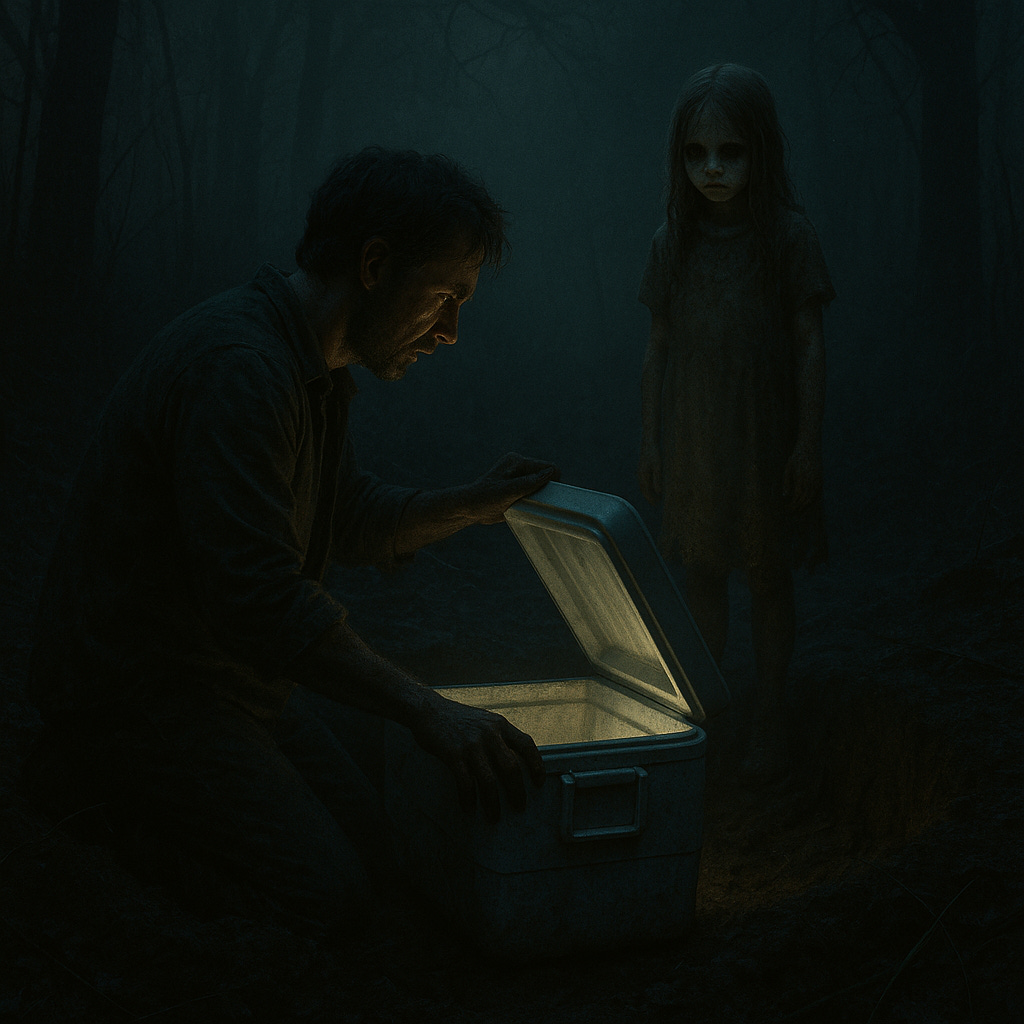
The Cooler
He never looked inside.
That was part of the deal, though no one had said it out loud. The cooler was white, industrial, the kind used for fish or deer or bodies that used to have names. And it was heavy.
He had to drag it. Through the clearing. Down the slope. Over roots and into the pit he’d already dug, hours earlier, sweating and steady, like it was just another job.
And it was. Wasn’t it?
He told himself that every time the cooler bumped a stone or caught on a tree root. Just another job.
But the problem was: it had weight.
Not the kind you measure in pounds.
The kind you feel in your back teeth. In your fingertips. In your name.
He didn’t check to see if it was sealed.
He didn’t want to know if it wasn’t.
He’d been hired by someone who didn’t give a name. Just coordinates. Just cash. Just enough menace in their smile to let him know: don’t ask.
He was good at that. Keeping his mouth shut. Doing what was needed.
But this wasn’t like the others.
This time, something inside the cooler shifted when he dragged it over the last root. Just a nudge. A roll. Something soft finding its final position.
He froze.
Not because he was afraid. But because he’d felt it recognize him.
He opened his mouth. Didn’t speak. Tasted copper.
The woods around him stilled, like the trees were listening.
He dropped the rope.
The cooler bumped forward on its own. Just a little.
He stared at it.
The wind moved in one long exhale.
Behind him, something stepped on a branch—but when he turned, there was no one there.
Just the pit. Just the cooler. Just the sound of something breathing slow inside his own chest that didn’t quite feel like his.
He crouched beside the pit. Let his hands press into the dirt. Just for balance. Just to feel something real.
The cooler was too clean.
No scratches. No scuffs. Like it had never been dragged at all.
But his arms were sore. His palms raw.
His footprints circled it. Proof he had touched it, moved it, pulled it here with his own body. And yet—
It looked untouched.
Like it had been waiting.
He touched the lid.
Not to open. Just to rest his fingers there.
The plastic was warm.
That’s when he knew: it wasn’t done with him.
He leaned in. Not to listen. But to hear.
And what he heard wasn’t a voice. Not exactly.
It was the memory of a voice. One that had called his name before he was born. One that had whispered in his dreams long after he forgot them.
One that said:
“You’re not the first.”
And just under that:
“But you could be the last.”
His knees buckled.
Not from fear. From understanding.
From recognition.
He didn’t stand. Not yet. The dirt was cool beneath his hands. Real. Or it had been.
Because now his fingers were tracing symbols.
Not drawn. Carved. Etched into the soil like it had been waiting for the weight of his palms to activate them.
Circles. Hooks. Shapes that made his vision ripple.
He jerked his hands back.
But the impressions remained. Fresh. Like blood in snow.
The cooler sighed.
He blinked—and for a moment, it wasn’t white.
It was blue. Bright blue, with a cartoon penguin sticker on the front. His name scrawled in permanent marker on the lid.
Marcus.
He hadn’t heard that name in years.
Not since—
The memory struck like a match: a summer day. A camping trip. His sister gone. His mother screaming his name.
Marcus.
The cooler wasn’t industrial then. It was small. It had wheels.
But it had still been heavy.
So heavy.
He pressed his hand to his chest, and the breathing inside him stopped.
Only his own breath now.
But it felt wrong. Too loud. Too empty.
He stood. Slowly. The pit at his feet no longer looked dug.
It looked like it had always been there.
And the cooler?
It looked like it had always belonged in it.
He reached for the lid.
And the cooler whispered:
“This time, open it.”
His fingers hovered above the latch.
Not shaking.
Still.
Like the world was holding its breath through him.
He looked down and saw the dirt creeping. Not metaphorical—moving. Crawling toward his boots like it had somewhere to be. Like it wanted to be closer to the cooler. Like it remembered, too.
He opened the latch.
Not fast. Not slow. Ritual speed. Like he’d done it before. Like his bones remembered.
The lid rose. No creak. No hiss.
Inside—
Nothing.
At first.
And then—a photo.
Old. Water-warped. Of him, maybe nine years old. Holding the handle of the same blue cooler, smiling at the camera.
Behind him, half in frame, a girl.
Small. Blond. Mud on her face. Staring at him like he was a stranger.
She wasn’t smiling.
He dropped the lid.
It clapped shut like a coffin.
His hands were shaking now.
Not from fear.
From memory.
She hadn’t gone missing.
Not really.
That’s the story the adults told. The one that passed into police reports and hushed phone calls and neighbors lowering their voices.
She wandered off. That’s what they said.
But Marcus remembered.
He remembered the screaming. Not hers—his.
He remembered the blood. Not hers—his.
He remembered how she stared at him, wide-eyed and silent, after the rock hit her temple.
He remembered the sound of her falling. The snap of her arm against a root. The way she didn’t cry. Just blinked. Like she was still waiting for him to finish the sentence.
He remembered dragging her.
He remembered the cooler.
She fit.
Not easily. But eventually.
He clicked it shut. Like a secret. Like a prayer.
And he smiled for the camera.
Because someone—he never remembered who—said, “Say cheese!”
So he did.
And she never spoke again.
Until now.
Her voice isn’t sound. It’s sensation.
It lifts the hairs on his arms. Fogs the corners of his vision.
“You left me,” it says—not accusing, not angry.
Just true.
“You left me, and then you forgot.”
He opened the cooler again, slow. Reverent.
The photo was gone.
In its place—a handprint. Small. Pressed into frost that hadn’t been there before.
And beneath it, something wrapped in damp cloth.
Something shaped like a child’s shoe.
He reached for it.
And the dirt whispered back:
“What you bury doesn’t stay gone.”
The cloth was slick and smelled like old leaves.
He peeled it back. Bit by bit.
Inside: a child’s sneaker. Pink. Caked in mud that flaked into his lap.
He knew it.
He knew it like he knew his own hands.
Tied to the laces, knotted and frayed, was a friendship bracelet—plastic beads faded, thread damp and clinging.
One side spelled L-I-L-Y.
The other: M-A-R-C.
And tucked beneath the knots—a baby tooth. Still white. Still perfect.
He didn’t remember her giving it to him.
But he remembered promising to keep it safe.
He dropped the shoe. It thudded against the dirt, too heavy for what it was.
The ground sighed.
The cooler closed on its own.
Click.
He stood.
Turned.
And she was there.
Not a ghost. Not a girl. Something between.
Mud still on her face. One shoe missing.
She didn’t speak. She didn’t have to.
Because he knew what she was asking.
She’d waited long enough.
His name caught in his throat. Not Marcus. Not Marc.
Just a breath.
Just a promise.
He stepped into the pit.
Kneeling.
The dirt welcomed him.
The cooler waited.
And Lily smiled.
By Amber Jensen (and voices what whisper from shadows)
If this story found its way into your bones, you can help the hum travel farther.
💀 Restack, share, and subscribe to stay close to the dark fiction and mythic side of the work—
so you don’t miss what’s still to come.
🕯️ Tips and offerings of gratitude are always welcome here →.